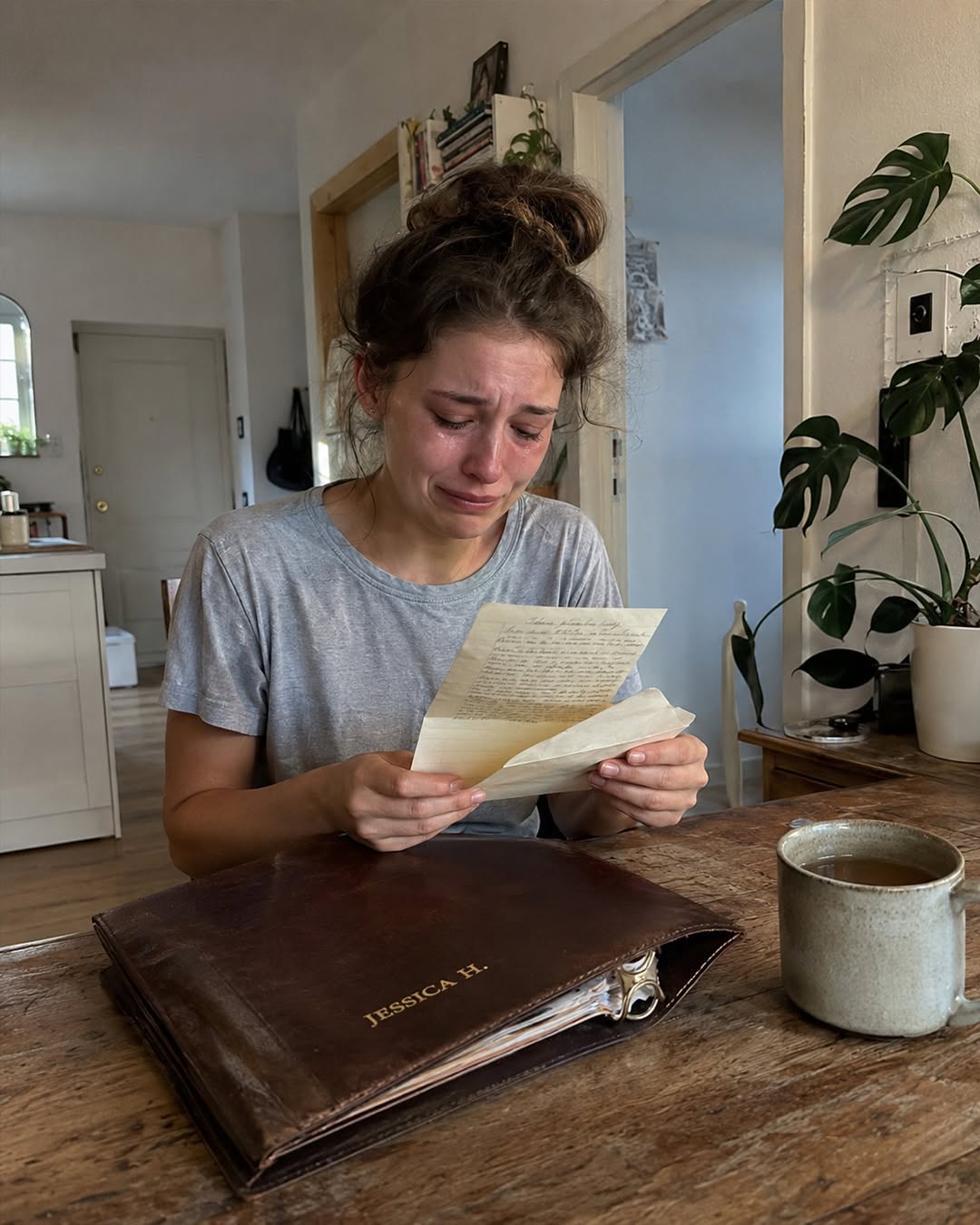
Tata opróżnił mój fundusz na studia medyczne, żeby pokryć bałagan mojego brata, a mama powiedziała, że on potrzebuje tego bardziej niż ja. Nie kłóciłam się w kuchni. Poczekałem, aż kierownik banku zwróci monitor w moją stronę i pokaże mi podpisy, których nigdy nie napisałem.
Pokój był zbyt cichy jak na miejsce, które zwykle brzęczało od drukarek, klawiatur i uprzejmych głosów.
Pani Patricia Hullbrook znała mnie od dziesiątego roku życia, kiedy wszedłem do First National Bank z dwudziestoma dolarami w pieniądzach urodzinowych złożonymi w różowej kopercie od mojej babci. Patricia pomogła mi otworzyć moje pierwsze konto oszczędnościowe. Pochyliła się nad biurkiem, uśmiechnęła się, jakby dzieliła się sekretem, i powiedziała mi: “Pieniądze to tylko papier, dopóki nie nadasz im celu.”
Przez dwanaście lat każdy zarobiony dolar miał jakiś cel.
Kawiarnia robi zmiany przed szkołą. Korepetycje dla młodszych dzieci po lekcjach. Sobotnie poranki w osiedlowej klinice, segregowanie kart i uzupełnianie zapasów, bo bycie blisko medycyny sprawiało, że marzenie wydawało się realne. Czeki urodzinowe od krewnych. Stypendia. Pensje za pracę letnią. Babcia Eleanor za 50 000 dolarów zostawiła mi notatkę, w której napisano: Dla twojego białego fartucha, słodka dziewczyno.
Wszystko to trafiło na to konto.
A teraz Patricia wpatrywała się w ekran z zaciśniętymi ustami, tak jak dorośli, którzy próbują cię nie przestraszyć, zanim będą musieli powiedzieć coś, co potrafi.
“Almeida,” powiedziała cicho, “czy autoryzowałeś te wypłaty?”
Pochyliłem się bliżej.
Były daty. Kwoty przelewu. Formularze autoryzacji. Moje imię wydrukowane na każdej linijce.
A pod każdym z nich był podpis, który niemal przypominał mój.
Prawie.
Pętle były blisko. Kąt był bliski. Ktokolwiek to przepisywał, znał kształt mojego pisma, ale nie rytm. Mój prawdziwy podpis poruszał się szybko na końcu, jakbym zawsze spieszył się do kolejnego elementu. Te sygnatury wyglądały na staranne. Powoli. Wyćwiczone.
Moje ręce były zimne na kolanach.
“Nie,” powiedziałem.
Patricia nie westchnęła. Nie udawała zaskoczenia. Sięgnęła do szuflady obok kolana i wyciągnęła cienką teczkę z niebieską zakładką z boku.
“Bałam się tego.”
Dzień wcześniej cała moja rodzina stała w kuchni, jakbym to ja był problemem.
List z akceptacją dotarł tego ranka.
Columbia Medical School.
Czytałem pierwszą linijkę tyle razy, że papier zmiękł w miejscu, gdzie kciuk ciągle go dotykał. Niosłem go z pokoju do kuchni i z powrotem, nie mogąc przestać się uśmiechać. Przez sześć lat marzenie było wyczerpujące, kosztowne i samotne. A potem nagle pojawił się czarnym atramentem.
Moja mama, Helen, właśnie rozładowywała zmywarkę, gdy jej o tym powiedziałam. Zamarła z talerzem w ręku. Przez sekundę zobaczyłem dumę na jej twarzy. Potem zniknęło to tak szybko, że zastanawiałem się, czy to sobie nie wyobraziłem.
“That’s wonderful, honey,” she said, but her voice came out thin.
Dad was in the garage, bent over the open hood of his old Chevrolet. He wiped his hands on a rag and smiled when I showed him the letter.
“Columbia,” he said, staring at the page. “That’s really something.”
I waited for him to hug me. Instead, he looked toward the house.
“We should talk inside.”
Those four words made the afternoon tilt.
Inside, Mom had stopped unloading the dishwasher. She stood at the kitchen island with both hands resting flat on the granite. My brother Max was in the living room, stretched across Dad’s leather recliner with a game controller in his hands, the volume low but still loud enough to fill the silence with little electronic sounds.
Dad cleared his throat.
“We had to use the account.”
I blinked at him.
“What account?”
He did not answer right away.
Mom lowered her eyes.
My chest tightened before my mind caught up.
“My school fund?” I said.
Dad dragged a hand over his face. “Max got into trouble.”
Max did not pause his game.
Mom moved toward me like she wanted to soften the blow with her body. “It’s not that simple.”
“It sounds simple,” I said. “You used my medical school money?”
Dad nodded once.
“How much?”
The dishwasher hummed. A car passed outside. Somewhere in the living room, Max’s game made a cheerful little winning sound.
“All of it,” Dad said.
My body went so still I could hear my pulse in my ears.
Mom touched my shoulder. “Family comes first, Almeida.”
I looked down at her hand.
She had said that phrase my whole life. Family comes first when Max needed help moving apartments after losing another job. Family comes first when he missed Dad’s birthday dinner and I was told not to make him feel bad. Family comes first when I was exhausted from work and still expected to smile through Sunday dinners while everyone pretended Max was just “figuring things out.”
But that day, the words landed differently.
Because family had come first, apparently.
Just not me.
“Max needs it more than you do right now,” Mom said.
I turned my head slowly toward the living room.
Max finally looked away from the television. He had the nerve to shrug.
“It’s temporary,” he said.
I stared at him.
“How is all of it temporary?”
He looked back at the screen. “You can get loans.”
Dad said my name in warning, like I was being difficult. Mom squeezed my shoulder, like my future was an inconvenience we could smooth over if everyone used soft voices.
I wanted to scream.
Instead, I stepped away from my mother’s hand.
“Show me the account.”
Dad looked at Mom.
That was my first clue.
“What?” I said.
Dad swallowed. “There’s not much to show right now.”
“How much is left?”
Nobody answered.
Max pressed buttons on his controller, faster now.
“How much?” I repeated.
Mom’s eyes filled with tears. “Don’t turn this into a scene.”
I laughed once, because my body did not know what else to do.
“A scene?”
“You don’t need to make this harder,” she whispered.
Something inside me folded itself into a tight, quiet shape. I picked up my acceptance letter from the kitchen island, smoothed the corner with my thumb, and walked back to my room.
Nobody followed me.
That night, I packed a bag and drove to my best friend Rachel’s apartment. I slept on her pullout couch under a faded quilt while she sat on the floor beside me, furious on my behalf.
“They can’t just take it,” she said.
“They already did.”
“Then you go to the bank.”
“I will.”
“Tomorrow?”
I stared at the ceiling.
“No,” I said. “Now.”
First National was ten minutes from closing when I pulled into the parking lot. The sky over Chicago had turned a bruised orange, and the lights inside the bank looked too warm, too normal, like people’s lives did not fall apart under fluorescent bulbs every day.
Robert, the security guard, smiled when he saw me.
“Almeida Reynolds,” he said. “Future doctor. Haven’t seen you in a while.”
The word doctor nearly cracked me open.
“Hi, Robert.”
“You okay?”
I nodded because if I tried to answer, I would have cried.
Sarah at the teller window waved. Marcus from account services called out, “How’s med school planning?”
I kept walking.
Patricia appeared in her office doorway before I reached the counter. She had silver hair pulled back in a smooth bun and sharp blue eyes that missed nothing.
“Almeida,” she said.
I forced myself to say it plainly. “I need to close my account.”
Her face changed.
Not dramatically. Just enough.
“Come with me.”
That was how I ended up in her office, staring at the signatures I had never written.
Patricia placed the blue-tabbed folder between us but kept her hand resting on top of it.
“I need you to listen carefully,” she said. “I can show you records connected to your own account. I can explain the bank’s process. I cannot make decisions for you.”
My throat was dry. “Okay.”
“Your father came in with documents authorizing a series of transfers.”
“My father told me he took $180,000.”
Patricia looked at the screen.
“The total amount moved out was $217,000.”
For a second, the numbers lost meaning. They became shapes. Lines. A foreign language.
“No,” I said.
“I’m sorry.”
“He said one-eighty.”
“I know.”
My hands curled around the arms of the chair. I thought of every 5:30 a.m. alarm, every coffee-stained apron, every Saturday I had spent alphabetizing patient files while other people went to brunch. I thought of Grandma Eleanor’s hand in mine, thin and warm under hospital blankets, her voice weak but steady.
Don’t let anyone tell you your future is too much to ask for.
Patricia slid the folder forward.
“There’s another issue,” she said. “Your grandmother’s contribution was not simply a gift.”
I looked up.
“What do you mean?”
“She established an educational trust. You were the sole beneficiary.”
I remembered the word trust from family conversations after Grandma died, but I had been twenty and grieving. Dad had handled the paperwork. Mom had said, “Your grandmother wanted this to be easy for you.”
Patricia opened the folder.
Inside was a copy of a document with my grandmother’s name at the top: Eleanor Matthews.
Beneath it were legal terms I did not fully understand, but one line stood out because Patricia tapped it gently with her fingernail.
Funds shall be used exclusively for the educational benefit of Almeida Reynolds.
I stopped breathing.
“My parents knew this?”
Patricia’s silence answered before she did.
“Your father presented paperwork years ago consolidating the account structure. At the time, the documents appeared valid.”
“Appeared?”
She met my eyes.
“That is one of the reasons I was concerned.”
The office seemed smaller than it had a minute before. The diplomas on her wall, the picture of her grandchildren, the little ceramic mug full of pens—everything looked too clear, like my brain was trying to hold onto ordinary objects because the truth was too large.
“My dad copied my signature,” I said.
Patricia did not correct me.
“And maybe other documents too?”
She folded her hands. “That is something an attorney should review.”
Attorney.
The word made me think of courtrooms, bills I could not pay, months of paperwork, my parents sitting across from me like I had betrayed them by asking not to be erased.
“I have seventeen dollars in my checking account,” I said.
Patricia’s expression softened.
“You have seventeen dollars,” she said, “and you have the truth. That is not nothing.”
My phone lit up on her desk.
Mom.
For once, I let it ring.
Patricia opened another page.
“There is something else you need to see before you go back home.”
At the top of the page was a transfer receipt dated the week before. Under “Purpose,” someone had typed: family support.
The phrase made me feel almost dizzy.
Family support.
That was what they called it when they emptied my future.
Patricia turned another sheet around. “Look at the date.”
I did.
March 15.
I frowned.
“I wasn’t in Illinois that day.”
Patricia waited.
“I was in Wisconsin for a research conference,” I said slowly. “I gave a presentation that morning. There are photos. Hotel records. Everything.”
She nodded once. “Then that is important.”
The folder stayed open between us like a door.
When I left the bank, the parking lot was nearly empty. I sat in my car for ten minutes with the acceptance letter on the passenger seat and Patricia’s folder in my lap. My mother called three more times. Dad called once. Max sent a text.
Don’t make this bigger than it has to be.
I stared at those words until they blurred.
Then I typed back, You already did.
Rachel was waiting by the door when I got back to her apartment. She took one look at my face and stepped aside.
“Bad?”
“Worse.”
She put the kettle on because that was what she did when she did not know how to fix something. Her apartment smelled like mint tea and laundry detergent. I sat at her tiny kitchen table and spread the copies Patricia had given me across the wood.
Rachel picked up the authorization with my copied signature.
“Oh my God,” she whispered.
“Don’t say that yet.”
“There’s more?”
I handed her the trust document.
She read the first paragraph. Then she sat down.
“Almeida.”
“I know.”
“They didn’t just take your savings.”
“I know.”
“They touched money your grandmother protected.”
The tears came then. Not loud. Not dramatic. Just a sudden silent overflow I could not stop. Rachel moved around the table and hugged me from the side, her chin on my shoulder.
For years, I had thought being the responsible one meant needing less. Less attention. Less help. Less grace. Max always had a crisis, and I always had a plan. Somewhere along the way, my family decided plans did not need protection.
But Grandma had known.
Even gone, she had seen me more clearly than the people sitting across the dinner table from me every week.
The next morning, I called Matthews & Associates, the law firm listed on the trust.
The receptionist became very quiet when I gave my name.
“One moment, please.”
Soft piano music played for less than a minute before a woman came on the line.
“This is Dana Matthews.”
I sat up straighter. “Hi. My name is Almeida Reynolds. I believe your firm handled my grandmother Eleanor Matthews’s educational trust.”
A pause.
“Yes,” she said. “We did.”
“I need to talk to someone about it.”
Another pause, longer this time.
“Are you safe to speak freely?”
The question chilled me.
“Yes.”
“Then come in today,” Dana said. “Bring anything the bank gave you.”
Matthews & Associates occupied the third floor of a brick building near the courthouse, with frosted glass doors and a waiting room full of quiet people pretending not to listen to each other’s problems. Dana Matthews was in her fifties, tall, composed, with silver-framed glasses and the same sharp cheekbones my grandmother had.
“You look like her,” I said before I could stop myself.
Dana smiled gently. “So do you.”
That almost undid me.
She led me into a conference room where a leather folder already sat on the table. Not a copy. The original trust binder. My grandmother’s name was embossed on the front in gold.
Dana opened it carefully.
“Your grandmother was very specific,” she said. “She wanted your education protected from family pressure.”
The phrase landed like a hand on my back.
Family pressure.
Clean. Polite. Devastating.
“She knew?” I asked.
Dana looked at me over her glasses. “She had concerns.”
I thought of Grandma watching Max skip visits, watching Mom excuse him, watching Dad speak about him like a problem that needed rescuing and about me like a project already under control.
Dana pulled an envelope from the back pocket of the binder.
My name was written across the front in Grandma’s handwriting.
Almeida.
Open only if needed.
The room blurred.
Dana did not rush me. She pushed a box of tissues toward me and folded her hands.
I opened the envelope with trembling fingers.
My dearest Almeida,
If you are reading this, then something has happened that made you question whether your future is still yours.
I hope I was wrong. I hope your parents honored what I set aside for you. But I have watched your family for many years, and I know love can become uneven when fear enters a home.
Your brother has always been given rescue. You have always been given expectations.
That is not fairness, sweet girl.